IO 流
1、文件
1.1、什么是文件
文件,对我们来说并不陌生,文件是保存数据的地方,比如大家经常使用的word文档,txt文件,excel文件这些都是文件。它既可以保存一张图片,也可以保存视频,声音…..
1.1.1、文件流
文件在程序中是以流的形式来操作的
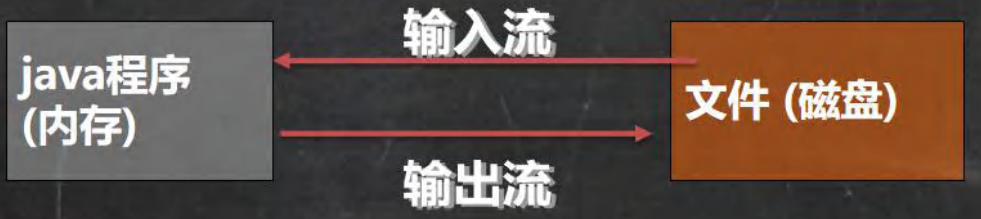
1.1.2、常用的文件操作
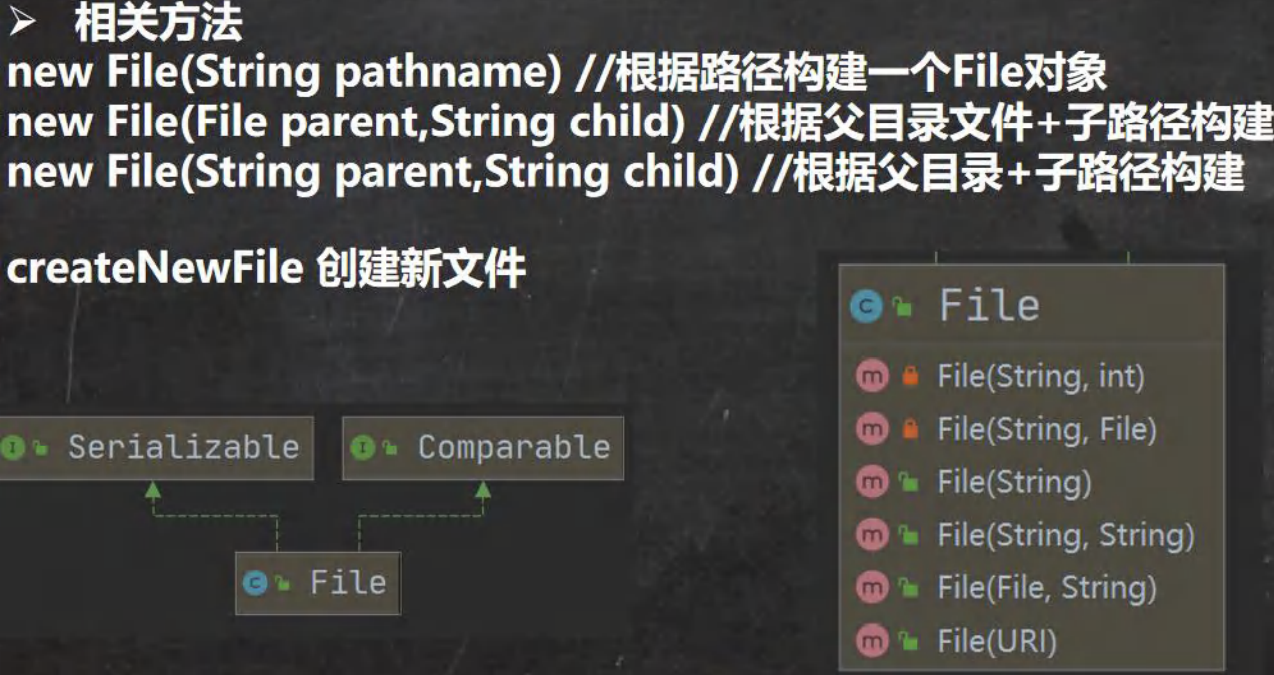
代码展示:
//方式1 new File(String pathname)
  @Test
  public void create01() {
      String filePath = "d:\\news1.txt";
      File file = new File(filePath);

      try {
          file.createNewFile();
          System.out.println("文件创建成功");
      } catch (IOException e) {
          e.printStackTrace();
      }

  }
  //方式2 new File(File parent,String child) //根据父目录文件+子路径构建
  @Test
  public  void create02() {
      File parentFile = new File("d:\\");
      String fileName = "news2.txt";
      //这里的file对象,在java程序中,只是一个对象
      //只有执行了createNewFile 方法,才会真正的,在磁盘创建该文件
      File file = new File(parentFile, fileName);

      try {
          file.createNewFile();
          System.out.println("创建成功~");
      } catch (IOException e) {
          e.printStackTrace();
      }
  }

  //方式3 new File(String parent,String child) //根据父目录+子路径构建
  @Test
  public void create03() {
      String parentPath = "d:\\";
      String fileName = "news4.txt";
      File file = new File(parentPath, fileName);

      try {
          file.createNewFile();
          System.out.println("创建成功~");
      } catch (IOException e) {
          e.printStackTrace();
      }
  }
1.1.3、获取文件的相关信息

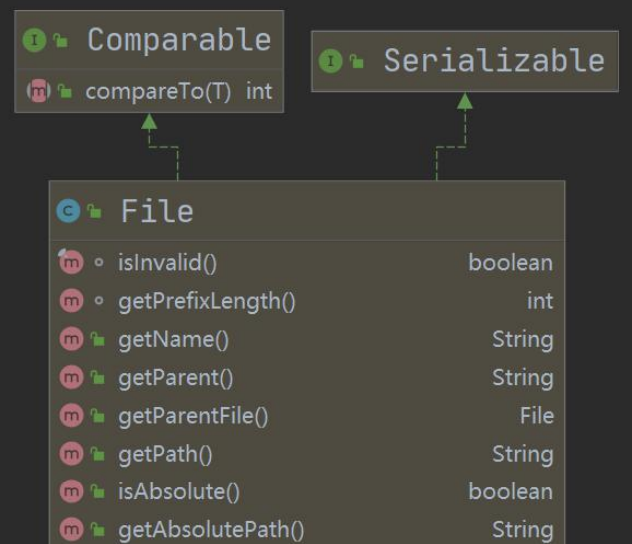
代码展示:
    //获取文件的信息
    @Test
    public void info() {
        //先创建文件对象
        File file = new File("d:\\news1.txt");

        //调用相应的方法,得到对应信息
        System.out.println("文件名字=" + file.getName());
        //getName、getAbsolutePath、getParent、length、exists、isFile、isDirectory
        System.out.println("文件绝对路径=" + file.getAbsolutePath());
        System.out.println("文件父级目录=" + file.getParent());
        System.out.println("文件大小(字节)=" + file.length());
        System.out.println("文件是否存在=" + file.exists());//T
        System.out.println("是不是一个文件=" + file.isFile());//T
        System.out.println("是不是一个目录=" + file.isDirectory());//F
    }

控制台输出:
文件名字=news1.txt
文件绝对路径=d:\news1.txt
文件父级目录=d:\
文件大小(字节)=0
文件是否存在=true
是不是一个文件=true
是不是一个目录=false
1.1.4、目录的操作和文件删除

代码展示:
//判断 d:\\news1.txt 是否存在,如果存在就删除
  @Test
  public void m1() {

      String filePath = "d:\\news1.txt";
      File file = new File(filePath);
      if (file.exists()) {
          if (file.delete()) {
              System.out.println(filePath + "删除成功");
          } else {
              System.out.println(filePath + "删除失败");
          }
      } else {
          System.out.println("该文件不存在...");
      }
  }

  //判断 D:\\demo02 是否存在,存在就删除,否则提示不存在
  //这里我们需要体会到,在java编程中,目录也被当做文件
  @Test
  public void m2() {
      String filePath = "D:\\demo02";
      File file = new File(filePath);
      if (file.exists()) {
          if (file.delete()) {
              System.out.println(filePath + "删除成功");
          } else {
              System.out.println(filePath + "删除失败");
          }
      } else {
          System.out.println("该目录不存在...");
      }
  }

  //判断 D:\\demo\\a\\b\\c 目录是否存在,如果存在就提示已经存在,否则就创建
  @Test
  public void m3() {
      String directoryPath = "D:\\demo\\a\\b\\c";
      File file = new File(directoryPath);
      if (file.exists()) {
          System.out.println(directoryPath + "存在..");
      } else {
          if (file.mkdirs()) { //创建一级目录使用mkdir() ,创建多级目录使用mkdirs()
              System.out.println(directoryPath + "创建成功..");
          } else {
              System.out.println(directoryPath + "创建失败...");
          }
      }
  }
2、IO 流原理及流的分类
2.1、流的分类
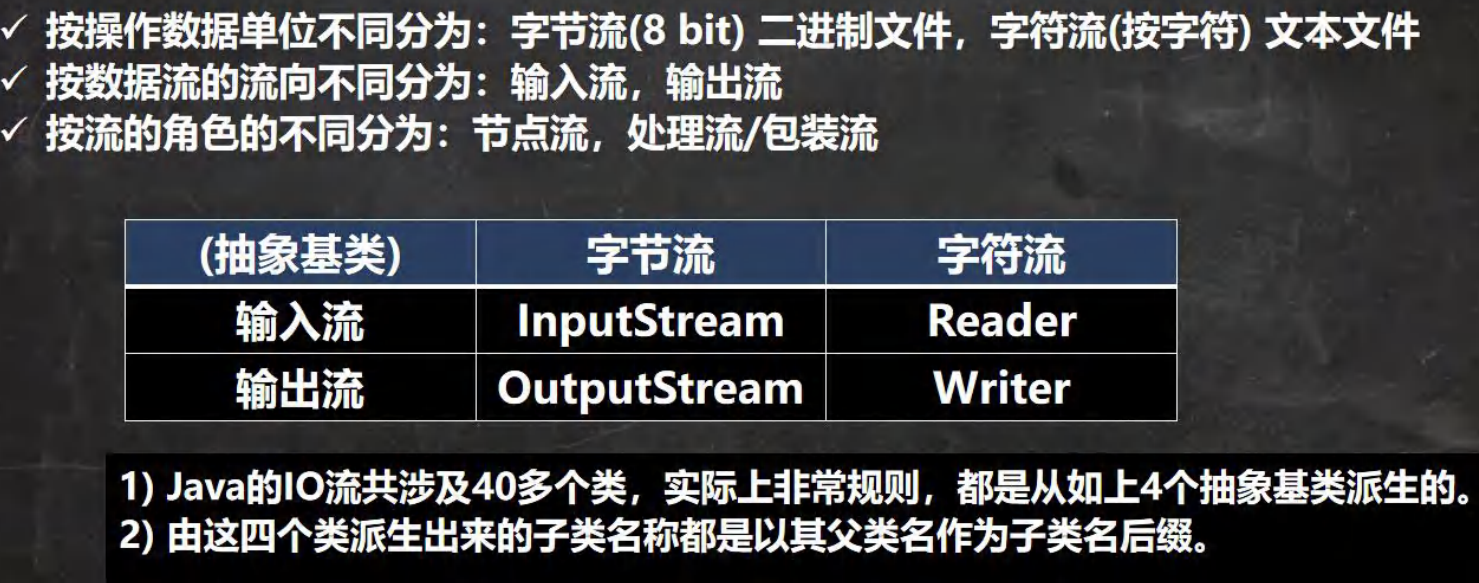
2.2、IO 流体系图-常用的
2.2.1、IO流体系图
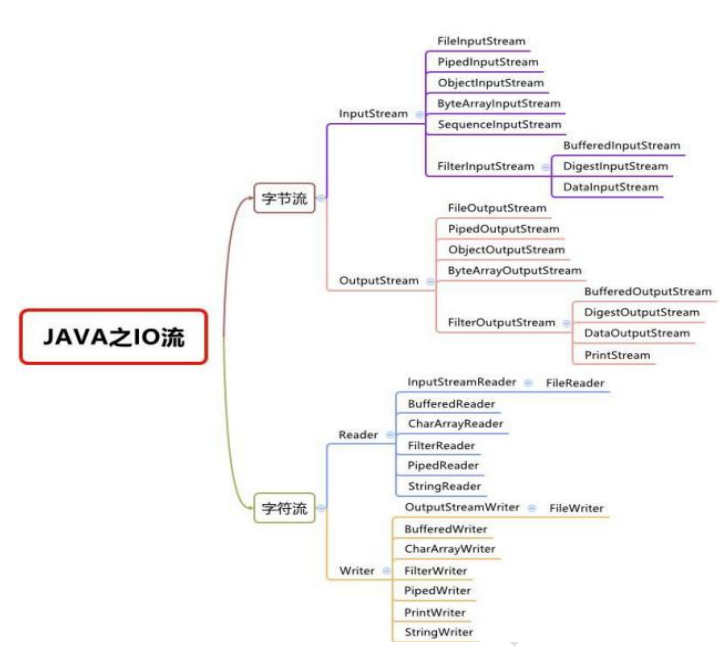
2.3、字节输入流inputstream
2.3.1、FileInputStream 介绍
代码展示:
@Test
  public void readFile01() {
      String filePath = "d:\\hello.txt";
      int readData = 0;
      FileInputStream fileInputStream = null;
      try {
          //创建 FileInputStream 对象,用于读取 文件
          fileInputStream = new FileInputStream(filePath);
          //从该输入流读取一个字节的数据。 如果没有输入可用,此方法将阻止。
          //如果返回-1 , 表示读取完毕
          while ((readData = fileInputStream.read()) != -1) {
              System.out.print((char)readData);//转成char显示
          }

      } catch (IOException e) {
          e.printStackTrace();
      } finally {
          //关闭文件流,释放资源.
          try {
              fileInputStream.close();
          } catch (IOException e) {
              e.printStackTrace();
          }
      }

  }

  /**
   * 使用 read(byte[] b) 读取文件,提高效率
   */
  @Test
  public void readFile02() {
      String filePath = "d:\\hello.txt";
      //字节数组
      byte[] buf = new byte[8]; //一次读取8个字节.
      int readLen = 0;
      FileInputStream fileInputStream = null;
      try {
          //创建 FileInputStream 对象,用于读取 文件
          fileInputStream = new FileInputStream(filePath);
          //从该输入流读取最多b.length字节的数据到字节数组。 此方法将阻塞,直到某些输入可用。
          //如果返回-1 , 表示读取完毕
          //如果读取正常, 返回实际读取的字节数
          while ((readLen = fileInputStream.read(buf)) != -1) {
              System.out.print(new String(buf, 0, readLen));//显示
          }

      } catch (IOException e) {
          e.printStackTrace();
      } finally {
          //关闭文件流,释放资源.
          try {
              fileInputStream.close();
          } catch (IOException e) {
              e.printStackTrace();
          }
      }

  }
2.3.2、ObjectInputStream 介绍
代码展示:
public class ObjectInputStream_ {
    public static void main(String[] args) throws IOException, ClassNotFoundException {
        //指定反序列化的文件
        String filePath = "d:\\data.dat";
        ObjectInputStream ois = new ObjectInputStream(new FileInputStream(filePath));
        //读取
        //老师解读
        //1. 读取(反序列化)的顺序需要和你保存数据(序列化)的顺序一致
        //2. 否则会出现异常

        System.out.println(ois.readInt());
        System.out.println(ois.readBoolean());

        System.out.println(ois.readChar());
        System.out.println(ois.readDouble());
        System.out.println(ois.readUTF());
        //dog 的编译类型是 Object , dog 的运行类型是 Dog
        Object dog = ois.readObject();
        System.out.println("运行类型=" + dog.getClass());
        System.out.println("dog信息=" + dog);//底层 Object -> Dog
        //这里是特别重要的细节:
        //1. 如果我们希望调用Dog的方法, 需要向下转型
        //2. 需要我们将Dog类的定义,放在到可以引用的位置
        Dog dog2 = (Dog)dog;
        System.out.println(dog2.getName()); //旺财..
        //关闭流, 关闭外层流即可,底层会关闭 FileInputStream 流
        ois.close();
    }
}
2.4、字节输出流outputstream
2.4.1、FileOutputStream介绍
代码展示:
/**
   * 演示使用FileOutputStream 将数据写到文件中,
   * 如果该文件不存在,则创建该文件
   */
  @Test
  public void writeFile() {

      //创建 FileOutputStream对象
      String filePath = "e:\\a.txt";
      FileOutputStream fileOutputStream = null;
      try {
          //得到 FileOutputStream对象 对象
          //老师说明
          //1. new FileOutputStream(filePath) 创建方式,当写入内容是,会覆盖原来的内容
          //2. new FileOutputStream(filePath, true) 创建方式,当写入内容是,是追加到文件后面
          fileOutputStream = new FileOutputStream(filePath, true);
          //写入一个字节
          //fileOutputStream.write('H');//
          //写入字符串
          String str = "hsp,world!";
          //str.getBytes() 可以把 字符串-> 字节数组
          //fileOutputStream.write(str.getBytes());
          /*
          write(byte[] b, int off, int len) 将 len字节从位于偏移量 off的指定字节数组写入此文件输出流
           */
          fileOutputStream.write(str.getBytes(), 0, 3);

      } catch (IOException e) {
          e.printStackTrace();
      } finally {
          try {
              fileOutputStream.close();
          } catch (IOException e) {
              e.printStackTrace();
          }
      }
  }
2.4.2、案例文件copy
public class FileCopy {
    public static void main(String[] args) {
        //完成 文件拷贝,将 d:\\Koala.jpg 拷贝 c:\\
        //思路分析
        //1. 创建文件的输入流 , 将文件读入到程序
        //2. 创建文件的输出流, 将读取到的文件数据,写入到指定的文件.
        String srcFilePath = "d:\\Koala.jpg";
        String destFilePath = "d:\\Koala3.jpg";
        FileInputStream fileInputStream = null;
        FileOutputStream fileOutputStream = null;

        try {

            fileInputStream = new FileInputStream(srcFilePath);
            fileOutputStream = new FileOutputStream(destFilePath);
            //定义一个字节数组,提高读取效果
            byte[] buf = new byte[1024];
            int readLen = 0;
            while ((readLen = fileInputStream.read(buf)) != -1) {
                //读取到后,就写入到文件 通过 fileOutputStream
                //即,是一边读,一边写
                fileOutputStream.write(buf, 0, readLen);//一定要使用这个方法

            }
            System.out.println("拷贝ok~");

        } catch (IOException e) {
            e.printStackTrace();
        } finally {
            try {
                //关闭输入流和输出流,释放资源
                if (fileInputStream != null) {
                    fileInputStream.close();
                }
                if (fileOutputStream != null) {
                    fileOutputStream.close();
                }
            } catch (IOException e) {
                e.printStackTrace();
            }
        }


    }
}
方式二:
/**
 * 演示使用BufferedOutputStream 和 BufferedInputStream使用
 * 使用他们,可以完成二进制文件拷贝.
 * 思考:字节流可以操作二进制文件,可以操作文本文件吗?当然可以
 */
public class BufferedCopy02 {
    public static void main(String[] args) {

//        String srcFilePath = "e:\\Koala.jpg";
//        String destFilePath = "e:\\hsp.jpg";
//        String srcFilePath = "e:\\0245_韩顺平零基础学Java_引出this.avi";
//        String destFilePath = "e:\\hsp.avi";
        String srcFilePath = "e:\\a.java";
        String destFilePath = "e:\\a3.java";

        //创建BufferedOutputStream对象BufferedInputStream对象
        BufferedInputStream bis = null;
        BufferedOutputStream bos = null;

        try {
            //因为 FileInputStream  是 InputStream 子类
            bis = new BufferedInputStream(new FileInputStream(srcFilePath));
            bos = new BufferedOutputStream(new FileOutputStream(destFilePath));

            //循环的读取文件,并写入到 destFilePath
            byte[] buff = new byte[1024];
            int readLen = 0;
            //当返回 -1 时,就表示文件读取完毕
            while ((readLen = bis.read(buff)) != -1) {
                bos.write(buff, 0, readLen);
            }

            System.out.println("文件拷贝完毕~~~");

        } catch (IOException e) {
            e.printStackTrace();
        } finally {

            //关闭流 , 关闭外层的处理流即可,底层会去关闭节点流
            try {
                if(bis != null) {
                    bis.close();
                }
                if(bos != null) {
                    bos.close();
                }
            } catch (IOException e) {
                e.printStackTrace();
            }
        }
    }
}
2.4.3、ObjectOutStream介绍
代码展示:
/**
 * 演示ObjectOutputStream的使用, 完成数据的序列化
 */
public class ObjectOutStream_ {
    public static void main(String[] args) throws Exception {
        //序列化后,保存的文件格式,不是存文本,而是按照他的格式来保存
        String filePath = "e:\\data.dat";

        ObjectOutputStream oos = new ObjectOutputStream(new FileOutputStream(filePath));

        //序列化数据到 e:\data.dat
        oos.writeInt(100);// int -> Integer (实现了 Serializable)
        oos.writeBoolean(true);// boolean -> Boolean (实现了 Serializable)
        oos.writeChar('a');// char -> Character (实现了 Serializable)
        oos.writeDouble(9.5);// double -> Double (实现了 Serializable)
        oos.writeUTF("韩顺平教育");//String
        //保存一个dog对象
        oos.writeObject(new Dog("旺财", 10, "日本", "白色"));
        oos.close();
        System.out.println("数据保存完毕(序列化形式)");
    }
}
3、FileReader 和 FileWriter 介绍
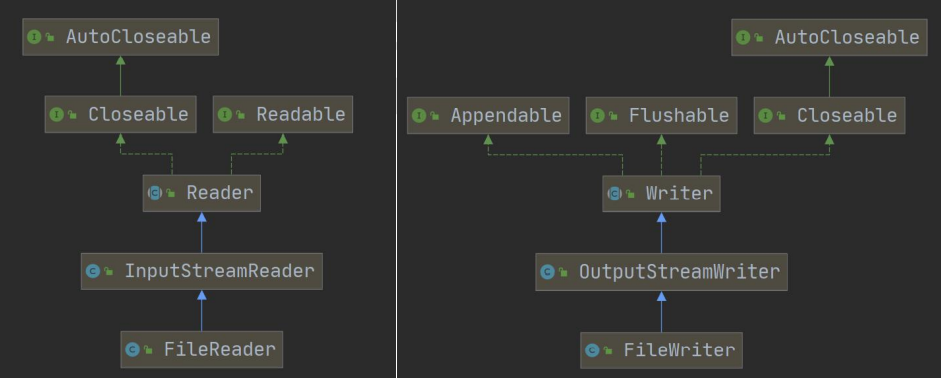
3.1、FileReader 相关方法:

3.2、FileWriter 常用方法:
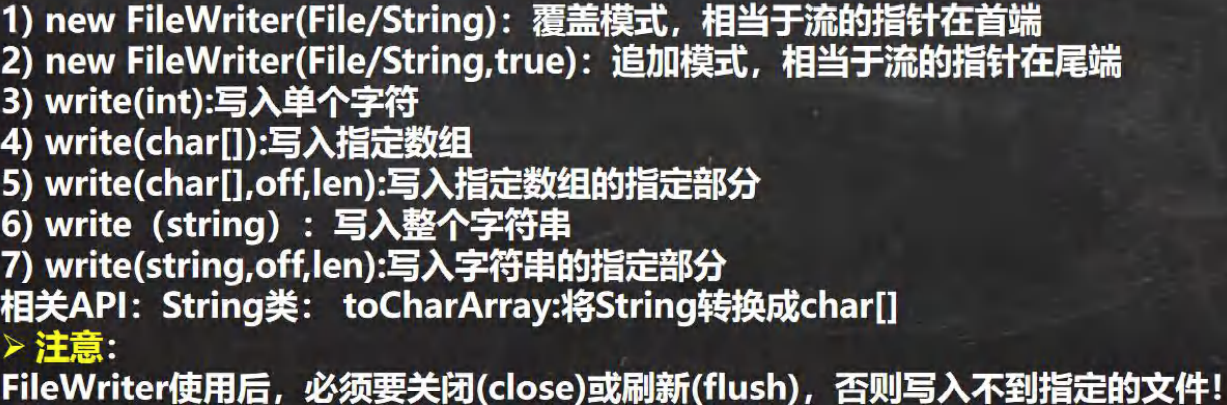
3.3、字符输入流Reader
3.3.1、FileReader 介绍
代码展示:
@Test
   public void readFile01() {
       String filePath = "e:\\story.txt";
       FileReader fileReader = null;
       int data = 0;
       //1. 创建FileReader对象
       try {
           fileReader = new FileReader(filePath);
           //循环读取 使用read, 单个字符读取
           while ((data = fileReader.read()) != -1) {
               System.out.print((char) data);
           }

       } catch (IOException e) {
           e.printStackTrace();
       } finally {
           try {
               if (fileReader != null) {
                   fileReader.close();
               }
           } catch (IOException e) {
               e.printStackTrace();
           }
       }
   }

   /**
    * 字符数组读取文件
    */
   @Test
   public void readFile02() {
       System.out.println("~~~readFile02 ~~~");
       String filePath = "e:\\story.txt";
       FileReader fileReader = null;

       int readLen = 0;
       char[] buf = new char[8];
       //1. 创建FileReader对象
       try {
           fileReader = new FileReader(filePath);
           //循环读取 使用read(buf), 返回的是实际读取到的字符数
           //如果返回-1, 说明到文件结束
           while ((readLen = fileReader.read(buf)) != -1) {
               System.out.print(new String(buf, 0, readLen));
           }

       } catch (IOException e) {
           e.printStackTrace();
       } finally {
           try {
               if (fileReader != null) {
                   fileReader.close();
               }
           } catch (IOException e) {
               e.printStackTrace();
           }
       }
   }
3.3.2、BufferedReader介绍
代码展示:
public class BufferedReader_ {
    public static void main(String[] args) throws Exception {

        String filePath = "e:\\a.java";
        //创建bufferedReader
        BufferedReader bufferedReader = new BufferedReader(new FileReader(filePath));
        //读取
        String line; //按行读取, 效率高
        //说明
        //1. bufferedReader.readLine() 是按行读取文件
        //2. 当返回null 时,表示文件读取完毕
        while ((line = bufferedReader.readLine()) != null) {
            System.out.println(line);
        }

        //关闭流, 这里注意,只需要关闭 BufferedReader ,因为底层会自动的去关闭 节点流
        //FileReader。
        /*
            public void close() throws IOException {
                synchronized (lock) {
                    if (in == null)
                        return;
                    try {
                        in.close();//in 就是我们传入的 new FileReader(filePath), 关闭了.
                    } finally {
                        in = null;
                        cb = null;
                    }
                }
            }

         */
        bufferedReader.close();

    }
}
3.4、字符输出流Writer
3.4.1、FileWriter介绍
代码展示:
public class FileWriter_ {
    public static void main(String[] args) {

        String filePath = "d:\\note.txt";
        //创建FileWriter对象
        FileWriter fileWriter = null;
        char[] chars = {'a', 'b', 'c'};
        try {
            fileWriter = new FileWriter(filePath);//默认是覆盖写入
//            3) write(int):写入单个字符
            fileWriter.write('H');
//            4) write(char[]):写入指定数组
            fileWriter.write(chars);
//            5) write(char[],off,len):写入指定数组的指定部分
            fileWriter.write("韩顺平教育".toCharArray(), 0, 3);
//            6) write(string):写入整个字符串
            fileWriter.write(" 你好北京~");
            fileWriter.write("风雨之后,定见彩虹");
//            7) write(string,off,len):写入字符串的指定部分
            fileWriter.write("上海天津", 0, 2);
            //在数据量大的情况下,可以使用循环操作.


        } catch (IOException e) {
            e.printStackTrace();
        } finally {

            //对应FileWriter , 一定要关闭流,或者flush才能真正的把数据写入到文件
            //老韩看源码就知道原因.
            /*
                看看代码
                private void writeBytes() throws IOException {
        this.bb.flip();
        int var1 = this.bb.limit();
        int var2 = this.bb.position();

        assert var2 <= var1;

        int var3 = var2 <= var1 ? var1 - var2 : 0;
        if (var3 > 0) {
            if (this.ch != null) {
                assert this.ch.write(this.bb) == var3 : var3;
            } else {
                this.out.write(this.bb.array(), this.bb.arrayOffset() + var2, var3);
            }
        }

        this.bb.clear();
    }
             */
            try {
                //fileWriter.flush();
                //关闭文件流,等价 flush() + 关闭
                fileWriter.close();
            } catch (IOException e) {
                e.printStackTrace();
            }

        }

        System.out.println("程序结束...");
    }
}
3.4.2、BufferedWriter介绍
代码展示:
public class BufferedWriter_ {
    public static void main(String[] args) throws IOException {
        String filePath = "e:\\ok.txt";
        //创建BufferedWriter
        //说明:
        //1. new FileWriter(filePath, true) 表示以追加的方式写入
        //2. new FileWriter(filePath) , 表示以覆盖的方式写入
        BufferedWriter bufferedWriter = new BufferedWriter(new FileWriter(filePath));
        bufferedWriter.write("hello, 韩顺平教育!");
        bufferedWriter.newLine();//插入一个和系统相关的换行
        bufferedWriter.write("hello2, 韩顺平教育!");
        bufferedWriter.newLine();
        bufferedWriter.write("hello3, 韩顺平教育!");
        bufferedWriter.newLine();

        //说明:关闭外层流即可 , 传入的 new FileWriter(filePath) ,会在底层关闭
        bufferedWriter.close();

    }
}
3.4.3、拷贝文件介绍(BufferedCopy)
代码展示:
public class BufferedCopy_ {

    public static void main(String[] args) {


        //老韩说明
        //1. BufferedReader 和 BufferedWriter 是安装字符操作
        //2. 不要去操作 二进制文件[声音,视频,doc, pdf ], 可能造成文件损坏
        //BufferedInputStream
        //BufferedOutputStream
        String srcFilePath = "e:\\a.java";
        String destFilePath = "e:\\a2.java";
//        String srcFilePath = "e:\\0245_韩顺平零基础学Java_引出this.avi";
//        String destFilePath = "e:\\a2韩顺平.avi";
        BufferedReader br = null;
        BufferedWriter bw = null;
        String line;
        try {
            br = new BufferedReader(new FileReader(srcFilePath));
            bw = new BufferedWriter(new FileWriter(destFilePath));

            //说明: readLine 读取一行内容,但是没有换行
            while ((line = br.readLine()) != null) {
                //每读取一行,就写入
                bw.write(line);
                //插入一个换行
                bw.newLine();
            }
            System.out.println("拷贝完毕...");

        } catch (IOException e) {
            e.printStackTrace();
        } finally {
            //关闭流
            try {
                if(br != null) {
                    br.close();
                }
                if(bw != null) {
                    bw.close();
                }
            } catch (IOException e) {
                e.printStackTrace();
            }
        }


    }
}
3.5、转换流-InputStreamReader 和 OutputStreamWriter
代码展示:
/**
 * 看一个中文乱码问题
 */
public class CodeQuestion {
    public static void main(String[] args) throws IOException {
        //读取e:\\a.txt 文件到程序
        //思路
        //1.  创建字符输入流 BufferedReader [处理流]
        //2. 使用 BufferedReader 对象读取a.txt
        //3. 默认情况下,读取文件是按照 utf-8 编码
        String filePath = "e:\\a.txt";
        BufferedReader br = new BufferedReader(new FileReader(filePath));

        String s = br.readLine();
        System.out.println("读取到的内容: " + s);
        br.close();

        //InputStreamReader
        //OutputStreamWriter
    }
}
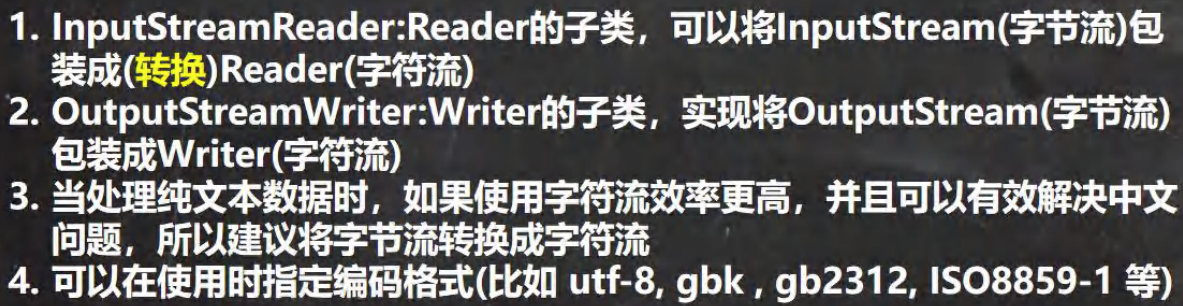

代码展示:
/**
 * 演示使用 InputStreamReader 转换流解决中文乱码问题
 * 将字节流 FileInputStream 转成字符流  InputStreamReader, 指定编码 gbk/utf-8
 */
public class InputStreamReader_ {
    public static void main(String[] args) throws IOException {

        String filePath = "e:\\a.txt";
        //解读
        //1. 把 FileInputStream 转成 InputStreamReader
        //2. 指定编码 gbk
        //InputStreamReader isr = new InputStreamReader(new FileInputStream(filePath), "gbk");
        //3. 把 InputStreamReader 传入 BufferedReader
        //BufferedReader br = new BufferedReader(isr);

        //将2 和 3 合在一起
        BufferedReader br = new BufferedReader(new InputStreamReader(
                                                    new FileInputStream(filePath), "gbk"));

        //4. 读取
        String s = br.readLine();
        System.out.println("读取内容=" + s);
        //5. 关闭外层流
        br.close();

    }


}

代码展示:
/**

 * 演示 OutputStreamWriter 使用
 * 把FileOutputStream 字节流,转成字符流 OutputStreamWriter
 * 指定处理的编码 gbk/utf-8/utf8
 */
public class OutputStreamWriter_ {
    public static void main(String[] args) throws IOException {
        String filePath = "e:\\hsp.txt";
        String charSet = "utf-8";
        OutputStreamWriter osw = new OutputStreamWriter(new FileOutputStream(filePath), charSet);
        osw.write("hi, 韩顺平教育");
        osw.close();
        System.out.println("按照 " + charSet + " 保存文件成功~");


    }
}
4、针对properties文件处理
4.1、原始方式:
代码展示:
public class Properties01 {
    public static void main(String[] args) throws IOException {


        //读取mysql.properties 文件,并得到ip, user 和 pwd
        BufferedReader br = new BufferedReader(new FileReader("src\\mysql.properties"));
        String line = "";
        while ((line = br.readLine()) != null) { //循环读取
            String[] split = line.split("=");
            //如果我们要求指定的ip值
            if("ip".equals(split[0])) {
                System.out.println(split[0] + "值是: " + split[1]);
            }
        }

        br.close();
    }
}
4.2、使用Properties 类
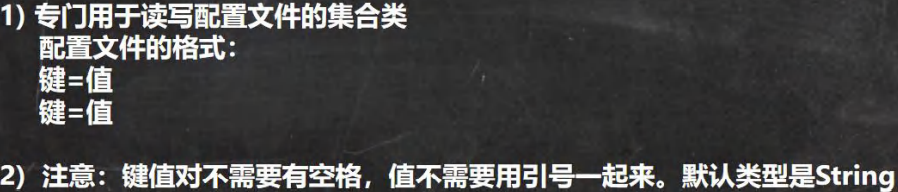
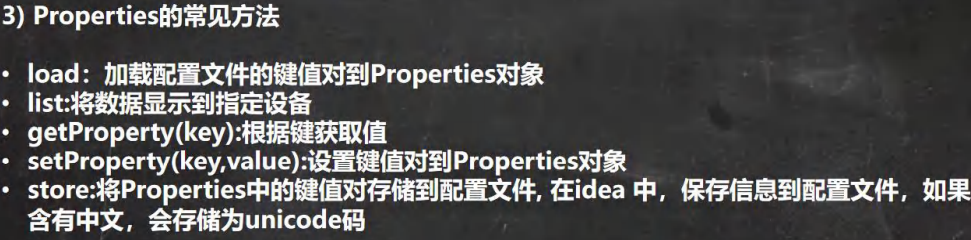
代码展示:
public class Properties02 {
    public static void main(String[] args) throws IOException {
        //使用Properties 类来读取mysql.properties 文件

        //1. 创建Properties 对象
        Properties properties = new Properties();
        //2. 加载指定配置文件
        properties.load(new FileReader("src\\mysql.properties"));
        //3. 把k-v显示控制台
        properties.list(System.out);
        //4. 根据key 获取对应的值
        String user = properties.getProperty("user");
        String pwd = properties.getProperty("pwd");
        System.out.println("用户名=" + user);
        System.out.println("密码是=" + pwd);


    }
}
public class Properties03 {
    public static void main(String[] args) throws IOException {
        //使用Properties 类来创建 配置文件, 修改配置文件内容

        Properties properties = new Properties();
        //创建
        //1.如果该文件没有key 就是创建
        //2.如果该文件有key ,就是修改
        /*
            Properties 父类是 Hashtable , 底层就是Hashtable 核心方法
            public synchronized V put(K key, V value) {
                // Make sure the value is not null
                if (value == null) {
                    throw new NullPointerException();
                }

                // Makes sure the key is not already in the hashtable.
                Entry<?,?> tab[] = table;
                int hash = key.hashCode();
                int index = (hash & 0x7FFFFFFF) % tab.length;
                @SuppressWarnings("unchecked")
                Entry<K,V> entry = (Entry<K,V>)tab[index];
                for(; entry != null ; entry = entry.next) {
                    if ((entry.hash == hash) && entry.key.equals(key)) {
                        V old = entry.value;
                        entry.value = value;//如果key 存在,就替换
                        return old;
                    }
                }

                addEntry(hash, key, value, index);//如果是新k, 就addEntry
                return null;
            }

         */
        properties.setProperty("charset", "utf8");
        properties.setProperty("user", "汤姆");//注意保存时,是中文的 unicode码值
        properties.setProperty("pwd", "888888");

        //将k-v 存储文件中即可
        properties.store(new FileOutputStream("src\\mysql2.properties"), null);
        System.out.println("保存配置文件成功~");

    }
}
5、相关练习
5.1、练习一
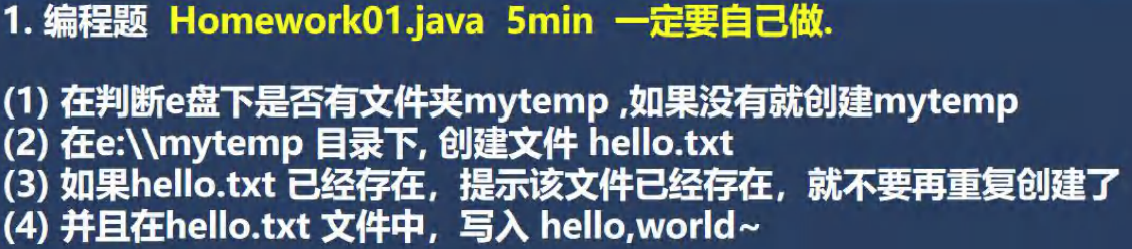
代码展示:
public class Homework01 {
    public static void main(String[] args) throws IOException {
        /**
         *(1) 在判断e盘下是否有文件夹mytemp ,如果没有就创建mytemp
         *(2) 在e:\\mytemp 目录下, 创建文件 hello.txt
         *(3) 如果hello.txt 已经存在,提示该文件已经存在,就不要再重复创建了
         *(4) 并且在hello.txt 文件中,写入 hello,world~

         */

        String directoryPath = "e:\\mytemp";
        File file = new File(directoryPath);
        if(!file.exists()) {
            //创建
            if(file.mkdirs()) {
                System.out.println("创建 " + directoryPath + " 创建成功" );
            }else {
                System.out.println("创建 " + directoryPath + " 创建失败");
            }
        }

        String filePath  = directoryPath + "\\hello.txt";// e:\mytemp\hello.txt
        file = new File(filePath);
        if(!file.exists()) {
            //创建文件
            if(file.createNewFile()) {
                System.out.println(filePath + " 创建成功~");

                //如果文件存在,我们就使用BufferedWriter 字符输入流写入内容
                BufferedWriter bufferedWriter = new BufferedWriter(new FileWriter(file));
                bufferedWriter.write("hello, world~~ 韩顺平教育");
                bufferedWriter.close();

            } else {
                System.out.println(filePath + " 创建失败~");
            }
        } else {
            //如果文件已经存在,给出提示信息
            System.out.println(filePath + " 已经存在,不在重复创建...");
        }


    }
}
5.2、练习二
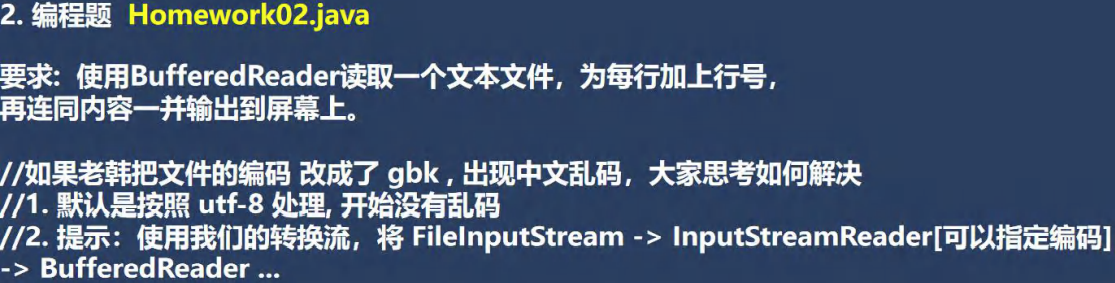
public class Homework02 {
    public static void main(String[] args) {
        /**
         * 要求:  使用BufferedReader读取一个文本文件,为每行加上行号,
         * 再连同内容一并输出到屏幕上。
         */

        String filePath = "e:\\a.txt";
        BufferedReader br = null;
        String line = "";
        int lineNum = 0;
        try {
            br = new BufferedReader(new FileReader(filePath));
            while ((line = br.readLine()) != null) {//循环读取
                System.out.println(++lineNum + line);
            }
        } catch (Exception e) {
            e.printStackTrace();
        } finally {

            try {
                if(br != null) {
                    br.close();
                }
            } catch (IOException e) {
                e.printStackTrace();
            }
        }
    }
}
5.3、练习三
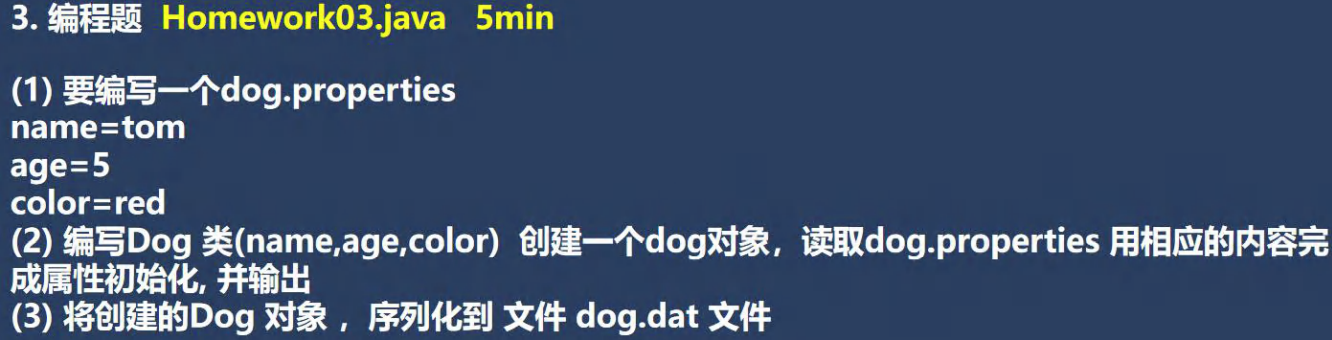
public class Homework03 {
    public static void main(String[] args) throws IOException {
        /**
         * (1) 要编写一个dog.properties   name=tom age=5 color=red
         * (2) 编写Dog 类(name,age,color)  创建一个dog对象,读取dog.properties 用相应的内容完成属性初始化, 并输出
         * (3) 将创建的Dog 对象 ,序列化到 文件 e:\\dog.dat 文件
         */
        String filePath = "src\\dog.properties";
        Properties properties = new Properties();
        properties.load(new FileReader(filePath));
        String name = properties.get("name") + ""; //Object -> String
        int age = Integer.parseInt(properties.get("age") + "");// Object -> int
        String color = properties.get("color") + "";//Object -> String

        Dog dog = new Dog(name, age, color);
        System.out.println("===dog对象信息====");
        System.out.println(dog);

        //将创建的Dog 对象 ,序列化到 文件 dog.dat 文件
        String serFilePath = "e:\\dog.dat";
        ObjectOutputStream oos = new ObjectOutputStream(new FileOutputStream(serFilePath));
        oos.writeObject(dog);

        //关闭流
        oos.close();
        System.out.println("dog对象,序列化完成...");
    }

    //在编写一个方法,反序列化dog
    @Test
    public void m1() throws IOException, ClassNotFoundException {
        String serFilePath = "e:\\dog.dat";
        ObjectInputStream ois = new ObjectInputStream(new FileInputStream(serFilePath));
        Dog dog = (Dog)ois.readObject();

        System.out.println("===反序列化后 dog====");
        System.out.println(dog);

        ois.close();

    }
}

class Dog implements  Serializable{
    private String name;
    private int age;
    private String color;

    public Dog(String name, int age, String color) {
        this.name = name;
        this.age = age;
        this.color = color;
    }

    @Override
    public String toString() {
        return "Dog{" +
                "name='" + name + '\'' +
                ", age=" + age +
                ", color='" + color + '\'' +
                '}';
    }
}
public class Homework03 {
    public static void main(String[] args) throws IOException {
        /**
         * (1) 要编写一个dog.properties   name=tom age=5 color=red
         * (2) 编写Dog 类(name,age,color)  创建一个dog对象,读取dog.properties 用相应的内容完成属性初始化, 并输出
         * (3) 将创建的Dog 对象 ,序列化到 文件 e:\\dog.dat 文件
         */
        String filePath = "src\\dog.properties";
        Properties properties = new Properties();
        properties.load(new FileReader(filePath));
        String name = properties.get("name") + ""; //Object -> String
        int age = Integer.parseInt(properties.get("age") + "");// Object -> int
        String color = properties.get("color") + "";//Object -> String

        Dog dog = new Dog(name, age, color);
        System.out.println("===dog对象信息====");
        System.out.println(dog);

        //将创建的Dog 对象 ,序列化到 文件 dog.dat 文件
        String serFilePath = "e:\\dog.dat";
        ObjectOutputStream oos = new ObjectOutputStream(new FileOutputStream(serFilePath));
        oos.writeObject(dog);

        //关闭流
        oos.close();
        System.out.println("dog对象,序列化完成...");
    }

    //在编写一个方法,反序列化dog
    @Test
    public void m1() throws IOException, ClassNotFoundException {
        String serFilePath = "e:\\dog.dat";
        ObjectInputStream ois = new ObjectInputStream(new FileInputStream(serFilePath));
        Dog dog = (Dog)ois.readObject();

        System.out.println("===反序列化后 dog====");
        System.out.println(dog);

        ois.close();

    }
}

class Dog implements  Serializable{
    private String name;
    private int age;
    private String color;

    public Dog(String name, int age, String color) {
        this.name = name;
        this.age = age;
        this.color = color;
    }

    @Override
    public String toString() {
        return "Dog{" +
                "name='" + name + '\'' +
                ", age=" + age +
                ", color='" + color + '\'' +
                '}';
    }
}